Category

Others

hoteliers

Hoteliers to Open Doors, But with Heightened Caution

By Others No Comments

Hoteliers to Open Doors, But with Heightened Caution

With the Novel Coronavirus (COVID-19) removing the plug from a growing economy with a nationwide lockdown, disrupted supply chains, and mass unemployment, the government’s decision to reopen the country in a phased manner is a breath of fresh air.

As part of Maharashtra’s Mission Begin Again Phase 5, the hospitality industry can reopen from Wednesday 8 July, but rules remain stringent for hotels in the MMR region, including Mumbai, Pune, and Nashik.

The hospitality industry is in metamorphosis as they gear up for the post-COVID era. At the outset, hotels outside containment zones will be allowed to operate at 33% capacity subject to adherence to social distancing and hygiene guidelines.

The rationale behind this is not only to avoid overcrowding but also to convert the remaining 67% capacity into a quarantine facility, as and when required by the government. Reduced operational capacity and increasing costs of running a hotel or restaurant will compel the industry to look for unconventional avenues to keep business afloat during a depressionary phase.

Moreover, several other guidelines ensuring hygiene and social distancing such as mandatory thermal screening, protective glass at reception tables, sanitizers for all hotel staff and guests, contactless digital payments, etc. will change the entire guest servicing experience.

This goes without saying that only asymptomatic guests will be allowed entry into hotels. As an additional measure, hotels are required to keep each room empty for a minimum of 24 hours post guest check-out and sanitize the room.

Many of the facilities, like bars, buffets, spas, and swimming pools, will have to stay shut for now and even though restaurants can open, they will only serve hotel guests for now. The State-mandated guidelines will propel the hospitality industry to provide a safe, contact-less experience from the pick up at the airport to the check-in, entire stay, and until check-out.

Implementation of these guidelines is easier for chain and luxury hotels with deep pockets, however high maintenance costs coupled with fewer customers will make implementation burdensome for Bed & Breakfast, Guest Houses, and unbranded budget hotels which constitute 95% of the hotel industry.

In light of this, the low-priced sector in the country can ride on India’s large domestic tourism to kick start the industry. However, the prolonged impact of the COVID-19 crisis, even after the lockdown has been relaxed, is likely to have a long-term impact on the sector.

Moreso, inbound traffic is bound to be slow due to travel restrictions and recessionary conditions limiting disposable income. In the organized sector, there are about 53,000 hotels and 5 lakh restaurants at present, and as per industry estimates, nearly one-third could shut shop permanently with losses for the hospitality sector reaching Rs. 90,000 crores.

Corporate travel will perhaps revive the chain of hotels through the lockdown has shown that corporate travel can be limited with the emergence of the work-from-home concept. As per FHRAI, hotels are seeing about 15-20 percent occupancy at present.

For restaurants, a limited number of working hours coupled with restrictions on the sale of alcohol makes business unviable, thereby hurling several small restaurants, bars, and hotels towards an empty treasury.

One way to drive sales upward is – continuous and effective marketing strategies that communicate with loyal guests through digital and social media during and post the lockdown. In doing so, hotels and restaurants can showcase their contributions and safety measures in wake of the pandemic for their customers.

Secondly, it is imperative for hotels and restaurants to maintain adequate liquidity for working capital. This can be achieved through a combination of renegotiation and extension of payment cycles with vendors, adopting RBI’s 3-month moratorium period for existing interest and principal payments to banks, and enforcing rigid cost-control measures while supporting the salaries of its staff members.

As a result, more cost will be allocated to technology, where one can facilitate minimum human interaction while making the stay safe, hygienic, and comfortable. It goes without saying that a resumption of economic activity is essential, but the vigil on the virus must remain.

The industry is starved for relaxation from the government, but more importantly for customers to feel at ease to visit hotels and restaurants once again. In a nutshell, zero-maintenance buildings, contactless interactions, and technology-based sanitization will emerge as the “new normal” for hotels and restaurants at large.


Tags: hospitality industry, hoteliers, mass unemployment, pua mass, hospitality sector, mass pua unemployment

debt collections financial planning

Financial Planning During Covid-19 Pandemic: Surviving on a Pay Cut

By Others No Comments

Financial Planning During Covid-19 Pandemic

While most employers announce a retrenchment, the aftermath is not a very easy phenomenon to go with. Since the inception of the Covid-19 pandemic, employees across industries have been staring at significant pay cuts if not a layoff. Undeniably, things are uncontrollable on all fronts, while adjusting to the new normal is what we have control over right now. The rising specter of salary losses has inadvertently led to rethinking financial planning goals.

A pay cut comes with an overhaul of the living and spending norms that individuals followed for years together. Smart strategies could assist us tide over the catastrophe without much hassle.

Considering the rosy part of the picture, the ones who were fortunate enough to retain their definitely find solace unlike millions of other people who have lost employment. What becomes important is to take the pay cut personally and devise a feasible chain of actions that could help one heal from the situation faster.

Firstly, one needs to be aware of a probable pay cut and gauge the likely phenomena. The earlier you anticipate the better as you can start planning earlier. Risk has been the driving factor affecting income. Millions of livelihoods have been wiped out by the pandemic.

Millions who are left with no employment have faced the primary brunt of the lockdown. Many employers who funded the first month of pay thereafter turned reluctant to extend the benevolence. With the economic activities coming to a jerking halt, there is no work and no pay; with families surviving upon the skimpy amount of savings, they had. Many have lent a hand on loans and pledge to endure through these mellow times.

Many significant monthly income earners, many have been sitting without payment or have settled with a significant pay cut in the hope to hold on to their jobs. Many have been left unsure about how the ‘work from home’ situation would extend overtime and whack upon their monthly wages.

Those who ran businesses have no income. Stocks remain unsold, bills are unpaid, and there is no revenue with no buyers. From big to small, all businesses have come to an unbelievable pause.

In this new world, thus across segments income has evaporated largely. Keeping the job and hunkering down is the best possible we are looking at. This customarily means that demand for credit will increase sooner or later. There is a high probability of loans being unsecured, or against assets accumulated, but as the liquidity reserves dry up, loans will move up.

Banks and NBFCs have enough liquidity to be reasonably expected to provide short-time finance. However, without economic activity for long, they cannot go too far either. This is why the lack of government spending, and the lack of bold reforms that place money in the hands of the people, sting.

Spending has changed dramatically as well. Changing risks to income has automatically led to individuals cutting back on many expenses. Incurring no expense on eating out, entertainment, travel, or clothes, is the new normal.

Beyond essential commodities and utility bills, there has been not a single penny spent. For households surviving on businesses, the spending habits have been left to bleed. The ability of these businesses to employ people, pay salaries and expand activity is curtailed, creating a negative spiral of loss.

Saving and investing in the background of such events have led to the burial of splendor. Individuals are barely managing to maintain a surplus in the banks, while ones with enough wealth are investigating newer strategies of investment to receive better output from the falling market.

The signs of market behavior indicate a prolonged recovery for all of us. It is time until we triumph over the pandemic. Until the time arrives, it is wise to restrict our spending only on essentials to avoid further strain on individual finance.

Between the mindless excesses of unbridled consumption, growth, and expansion and the rigid frugality of minimalistic existence, lies a means that we may not be able to choose or pursue. The next 12 months are about that exploration that might define the new character and culture of the household.

To endure through the next few months individuals have been preparing for a contingent fund by minimizing regular expenses. There has been this growing trend to clinch enough cash to survive until this crisis passes. Temporarily there have been reductions in contributions in retirement plans as one focuses on redirecting resources to the emergency fund.

Individuals have been inclined to the repayment of loans and have been regular with EMI payments, despite the available moratorium to avoid any extra burden in the future, unless the same has been impossible to be done due to lack of enough resources. Individuals have minded toward long-term savings to build upon enough corpus to hedge the risk of market fluctuation and compounding returns.


Tags: pay cut, layoff, financial planning, financial plan in business plan, financial budget, lay off 2021

unlock 2.0

Unlock 2.0: Maharashtra Allows Opening Of Hotels

By Others No Comments

Unlock 2.0

The fresh guidelines issued by the state government allow hospitality entities like hotels and lodges to provide accommodation services, and outside containment zones to reopen unless being used as a quarantine center. The permission for reopening is highly conditional and ought to be done adhering to social distancing norms vigorously.

Notably, public utility services like gymnasiums, gaming, and others are bound to remain closed unless further orders. The decision could have a reverberating impact keeping in mind the huge number of cases being reported every day while certain places like Aurangabad have extended restrictions in the wake of the rising cases. Amidst an extended lockdown due to the spurt in cases and deaths, such a decision could well backfire.

Hoteliers have to be highly cautious in taking care of all preventive measures to ensure the safety of their customers. Nevertheless, despite the risks involved, the industry can breathe relief by resuming operations to gauge the path of recovery.

The Mixed Setup: Requisitioning and Reopening
Maharashtra leading the way, and many of the states can be anticipated to allow hotels to resume business with restrictions in place in the phased unlock period. However, despite such possibilities, the industry has been jittery by now, as iconic hotels have been ordered to be converted to quarantine centers.

The list includes epochal Parador like the Taj Mahal Hotel which triggered difficulties as the premises are in an inhabitable condition given the renovation that started months ago. However, what becomes important here is to understand that hotels are not designed for accommodating patients and neither is the staff prepared to render appropriate services.

Moreover, now that hotels are being allowed to reopen with limited occupancy, such requisitioning could be disastrous for hoteliers in business. The added burden of sanitizing premises vigorously has been budging trouble for all hoteliers who now hope to foresee normalization soon.

Hoteliers presume hardship ahead
In order to avoid transmission risks, accommodation facilities in states permitting operations to resume speculate troubled times ahead. The first hurdle that pops in is working with limited staff. The pandemic has led to the added responsibility of sanitizing the premises at regular intervals along with ensuring safety protocols, which is an extra job to undertake, and in such a scenario having limited staff, and facilities could lead to genuine concerns.

Even iconic hotels have pronounced the obvious choice to do away with lavish buffets and have decided to limit restaurant facilities to curb the infections which would have direct implications on the revenue generated. The additional gist hampering functions include making provisions of PPE kits and sensitization of touchpoints frequently.

The workforce of hotels has expressed concerns over the lingering risk of being infected as hotels begin taking in guests. The occupancy can be lower presently, however, with a lack of means of transportation, the risk involved in the everyday freight of staff members cannot be overlooked.

The bulging idea of workstations shifting from staycations
Doing a COVID somersault, hotel chains are pivoting on the idea of converting hotels into workstations with a work-from-a retreat along with a bunch of other offerings. Accommodation chains are opening up drivable-distance properties for executives looking for a safe and salubrious place to work out of the home.

The pivoted places have been designed to accommodate long-stay making it Covid safe with adequate Wi-Fi and connectivity facilities. The chains anticipate long-stay workstations to become the trend with the changing outlook of industry performance across segments driven by the pandemic.

Corporate persons have been celebrating such a stay to accommodate staff to continue efficient working during the lockdown, a step above the current work from the home trend.

Restaurants shift online to meet customer cravings
Indian restaurateurs are up for a treat post the lockdown as people crave dine-outs. Foodies across the country have been ardently waiting to reign on the supreme delicacies post the lockdown. Online food delivery has been one of the very few segments emerging as winners through the pandemic.

The likely changes in lifestyle would include a paradigm shift in eating habits. The eating-out culture has been fairly exacerbated by the looming safety ad hygiene concerns and online delivery has come to the rescue.

Restaurants that have partnered with delivery partners have been significantly increasing while the industry put in concerted efforts to attract customers and keep businesses afloat. Definitely, the pandemic shall mark the end of the emerging social dining trends replaced by social distancing protocols.  

Covid-19 Impact: Hotels may be permanently shut
The leisure and tourism industry has come to a jerking halt with the spread of the virus having a cataclysmic effect on the sector. The persistently mounting stress on the industry shall possibly force several hotels to shut their businesses permanently. Despite the unlock phase, restaurants and hotels have seen dismal responses from customers, it is unviable for many stakeholders to sustain with low footfalls and increased spending.

The restrictions have been eased but the night curfew still continues at various places hitting the dinner segments the worst. Hotels are having to face the brunt as travel restrictions remain in place with limited flights and trains operating.

The states wherein the reopening of hotels has been allowed are witnessing diminished occupancy with the tourism sector remaining at a standstill. The impact of the pandemic followed by the enforced lockdown shall be prolonged, ultimately causing death for a major part of the industry unable to cope with the changing trends and the shortfall in business.


Tags: Unlock 2.0, unlock 2, opening of hotels, hospitality entities

Covid Health Insurance Cover

Covid Health Insurance Cover: To Buy or Not to Buy

By Others No Comments

Covid Health Insurance Cover

As India continues fairly in the race of increasing Covid-19 cases, globally, the IRDAI directive to mandatorily offer a standard health insurance policy for all policyholders, is much required. Provision for covering all hospitalization expenses along with consumables like PPE, gloves, masks, and other similar utilities, shall provide immense relief to consumers expending on treatment currently.

The actual benefit of such covers can be eventually discovered as the situation subsides, cause as of now the world is still engrossed around the disease and the associated panic.

Inadvertently, extending the existing policy coverage to rope in such adverse situations was quintessential. Given that the disease-specific coverage is limited to Covid-19, the price point shall be admittedly lower than any comprehensive health policy. As a note of caution, the specific cover in no way should be taken as a substitute for regular health covers.

Hereafter, consumers have an option to choose from the three primary available options. There have been previous announcements of extending coverage of ordinary policy to include Covid-19 expenses and that stands valid to date. So, the specific coverage announced could be an added supplement along with the normal policy or it could be purchased only for Covid-19 depending on affordability options, as the case may be.

The driving idea recently has been to facilitate consumers in all possible means to battle against the stymie virus. As the country resumes in a staggered fashion, there has been increasing movement of people throughout. Considering the number of reported cases every day, there is no hint of the curve flattening anytime soon.

It appears that the virus is here to stay much beyond our anticipation. In the interest of the consumers, paying a single premium yielding a fixed benefit is an extremely benefitting proposition.

On the contrary, the challenge lies in the insurers to devise profitable pricing for the product. The general trend is that premiums are computed based on age bands, however, for the current data set, there is no established age-wise trend as of now. The entire phenomenon is absolutely dependent on the contraction of the infection or the recovery rates.

Notably, the base cover will be offered on an indemnity basis while the optional cover ought to be made available on a benefits basis. Being a standard product, insurers are having the open option of fixing the prices based on their underwriting understanding, consequently, there are varied premiums across insurers. The indemnity policy has definitely ticked the right box aiding in providing a dedicated financial cover.

The much-needed measures include including the specific requirements put forth by Covid-19 which is a miss in normal policy covers. The gleaming part of the story is that pre-existing co-morbid conditions have been considered under the purview of the new product.

The consumers have to wait till a condensed policy is circulated with clear directions regarding the underwriting process, whether or not it shall cater to the vulnerable populace, and how soon will there be access to the product online. The relative prices of such products are further looked up compared with the regular short-term covers available.

In a nutshell, the policy is definitely a go-to choice for someone not having a health insurance cover and is desperately looking for one to acquire the necessary protection owing to the ongoing crisis. In the absence of a regular policy, the short-term product can yield many benefits.

Nevertheless, the wise choice would be to go for a regular policy as it would cater to treatment for covid as well as other ailments.

There is not much of a significant addition to the existing framework. On closer scrutiny of the provisions, it can be well said to be restrictive with a cap on the policy coverage. For a first-time buyer, it is rather advisable to have a broad perspective while choosing the policy cover, not merely focussing on Covid-19.

Apart from the affordability issue, the new plan might be avoided in all probabilities. A disease-specific health cover might not yield much in the long run. The intelligent option here would be to opt for a comprehensive policy to receive adequate coverage for all possible illnesses.


Tags: Covid Insurance Cover, hospitalisation expenses, Covid Health Insurance Cover, irdai directive

gdp growth statistics

GDP Growth Statistics: Never Mind GDP, Corona Eats Your Income

By Others No Comments

GDP Growth Statistics

GDP Growth Statistics: Among the many changes, Covid-19 has brought to our lives is attention to statistics on a daily basis.  A number of infected cases, tests, hospitalization, deaths, and recoveries.  People from all walks of life have shown interest in these statistical figures.

Every now and then, some international institution produces GDP growth statistics as well.  These get attention too, but not even remotely close to Covid-19.

On an analysis of the current trend, residents of prosperous states such as Delhi, Chandigarh, Maharashtra, Gujarat, and Telangana are expected to lose over 15 percent of their annual incomes in the current year, which is thrice as high as the average decline of per capita income of the country.

However, in relatively less well-off states such as Madhya Pradesh, Uttar Pradesh, Bihar, Odisha, etc., the decline in per capita income is expected to be less than 8 percent. It is to be noted that after a major economic crisis, per capita income takes longer to swing back to the old levels than the GDP.

The reason is simple.  People care about the risks to their daily lives when living under pandemic conditions. The fear of contracting the virus keeps many awake at night, even causing serious mental stress.

This is not because GDP growth is unimportant.  The ecosystem around the individuals and their families matters more than the changes in an accounting construct such as the GDP, particularly so when public health is facing risks of the kind not experienced in over a century.

The economic destruction Covid-19 is causing does not take the form of ashes.  It takes the form of jobs and income losses for millions from different segments and industries. It is reflected by the empty saloons, shops, footpath trades, tea stalls, restaurants, public transport, and sports stadiums, among others.  It is manifested in closed factories and unsold farm outputs.

Supply and demand are both down abruptly, causing unexpectedly far-reaching repercussions. The cost of living and the cost of doing business have both spiked.  The interconnectedness between the speed of lifting the mobility restrictions and the rate of community spread of the virus, as evident from the experience of countries attempting to reopen in phases, has deepened radical uncertainties related to the outlook on global economic recovery.

A consensus is emerging globally that the recession will be deeper and the recovery will be slower. The stumbling reopening of the entire world has made it clear that the speed of recovery will depend on the spread of the virus.

Medium-term macroeconomic and fiscal frameworks are never written in stone.  Revisions have to begin with the recognition that the quest for GDP growth in a pandemic is like searching for a needle, in a haystack in darkness, that isn’t there.  Business as usual in public expenditure planning cannot connect the economy with the health and social outcomes that will determine the quality of our belligerent coexistence with the virus.

There are a lot of things outside the counting of GDP we just do not have a handle on currently.  Whether economies can continue to grow forever was an unresolved debate before Covid-19. The virus has paused this debate by shifting attention to the challenge of making the economy thrive whether or not it grows.  

This challenge can be unbundled into fortifying resistance to the virus and ensuring that no one falls short of the essentials of life.  These formidable challenges can only be managed through collective action that starts long before they become full-blown crises.

We do not need GDP numbers to know the effect of the lockdown: the majority of our states, and practically all of our trading partners, stopped us from eating at restaurants (and then maybe going to the gym to work it off), having elective surgery for a bum knee, sending our kids to school, or having our teeth cleaned.

Effectively, the lockdown became a ban on living everyday life. Moreover, for scores of millions of Indians today no work means no income. If handled right, policies to contain the spread of the virus will actually deliver huge economic benefits. Many in the rest of the world, with some exceptions, are starting to get this.


Tags: gdp growth, gdp statistics, gross domestic product, gdp growth statistics, real gdp, gdp growth rate, gdp 2021

future of cash

Future of Cash: Impact of Covid-19 on Payments

By Others No Comments

Future of Cash: Covid-19 Impact on Payments

The intersection of global emergency and revolutionary changes in the ways of international payments and transactions has demanded a new path to maintain financial liquidity in the markets. Since the inception of the pandemic in December, businesses across the country have been facing volatile financial markets and growing concerns about the uncertainty of future cash flows and revenues.

The entire world of small and middle-sized companies is in a constant struggle for survival due to the frozen demands and the contingent government-declared lockdowns. 

COVID -19 has resulted in a reduction in cash being used as a medium of exchange. The reason attributed is the inability to have a physical reach to execute such payments during the lockdown. The potential threat of money bills being a carrier of the virus made it further a discouraging choice.

These have forced individuals to switch to digital payments as urgency to acquire the essential goods. The cash processing agencies, such as banks, are operating in reduced hours or for important transactions only. Cashless payments could become a permanent fixture in the economic exchange ecosystem hereafter.

However, a robust digital payment system has yet not been achieved in the country owing to several structural challenges that hindered the boost in cashless transactions. Technological advancement, current emergency, and a need for cashless transactions have eradicated such boulders to a certain extent.

Electronic payments faced a number of barriers and obstacles in bricks and mortar shops, along with challenges like cybercrime, fraud, and privacy concerns seem. The widespread move to contactless, cashless payment systems raises concerns about the impact on low-income consumers, often mobile members, and members of minority groups who do not have access to credit or debit cards. 

For now, the move away from cash remains clear and can not be ruled out completely. While a society that is not fully cashed may not be the outlook for the time being, the following factors are likely to affect market participants because the Covid-19 pandemic will likely have long-term effects on consumer behavior.

The concerted effort from various stakeholders potentially facilitates the reduction of cash transactions in the system. The important considerations in this regard are-

  • A complex Digital Payment Setup

A variety of options available with different technological frameworks and regulations make it difficult to operate for an average citizen. Further, the lack of uniform technological advancement has kept consumers from adopting digital payment methods wholeheartedly.

With the rising rural population getting connected to high-speed internet and smartphones, digital startups have focused on developing secured consumer-friendly methods in order to build trust and drive adoption. Aadhar-based welfare delivery and a relentless drive towards formalization of transactions have been the cornerstones of the current government’s policies.

The introduction of the Unified Payment Interface (UPI) and the Bharat Interface for Money (BHIM) app is accelerating the move towards a cashless economy. This has given an impetus to the emerging digital transactions sector in India. Further, the government has come to the aid of distressed citizens by announcing easier means of transaction, going cashless. The requirement of a minimum balance requirement fee remains no more along with reduced digital charges for transactions.

  • The Intermediary interference and charges

The costs associated with online payment through RTGS and NEFT systems have also created a hindrance. These methods are not only expensive but also time-consuming at a time when there are a number of technologies available that offer real-time fund transfer.

Startups are now focusing on technologies providing quicker digital payment solutions to the consumers who will have a better opportunity to get ahead, POS terminals, Biometric Authentication Integration, and QR Codes are used by onboard merchants. One of the main challenges in digital payments is the interchange fee.

The Finance Ministry has announced relaxations such as removal of debit card ATM charges to help increase the number of transactions. 

  • Maintenance of Data Security

Data storage is one of the most critical and essential aspects of cashless payment methods. The high risks associated with cybersecurity have kept consumers threatened by adopting digital payment. Digital payments Banks and E-Wallet companies have set up safe, secure, and compliant data centers on their premises.

For enhanced security measures, banks and wallets are now using Aadhar Based payment systems making use of Biometrics, OTP (One Time Password), and EMV (Chip+Pin) technology for card acceptance. Collaboratively these have always helped in maintaining data security for companies as well as customers.

  • Adherence to Regulatory Compliances

For digital payments especially through wallets, there are guidelines issued by RBI in India. These guidelines get revised on a timely basis which makes way for a more transparent ecosystem in the payments space. Companies offering wallets are required to convert existing wallets that are without KYC to full KYC. KYC complaints can utilize the extended monthly limit. In the future, these limits need further relaxation to support the needs of the individuals. 

  • Response time 

There is another important challenge that these payment methods face response time to execute a transaction. The complex authentication method and attached chances of payment failure and fraud have disheartened the users in many instances. Irrespective of the reasons behind it, every failed transaction causes irritation to a customer.

Repeated failures may even result in customers feeling frustrated about the bank’s service quality and capabilities. These responses are identified immediately for corrective measures to be undertaken. The modern UPI system making the authentication in-built into the smartphone has removed the time taken to execute a transaction.

  • Cryptocurrency – The new era of digital transaction 

A cryptocurrency is a digital “asset” that uses peer-to-peer networking making it decentralized and broadly accessible. The asset is a digital “token” with no backing or intrinsic value. The method used is new blockchain technology. Blockchain data is stored in groups or blocks of information.

It is impossible to delete or modify information previously stored on the chain because blocks are replicated across multiple ledgers. For the above reasons, blockchain is highly secure. Every user has a unique public and private key. The public key acts like a username or an email address. It allows users to transfer a cryptocurrency to and from other users directly.

The private key is akin to a personal password that gives individual users access to their cryptocurrency accounts or digital wallets.

Their end of this medical crisis is beyond anticipation, the primary implication of the same would lead citizens to be habituated to the use of digital payment platforms, almost by force. The technological setup of smartphone penetration improving significantly, with almost 5.1 billion total unique mobile users and 3.7 billion unique mobile internet users, will surely help smooth the adoption of digital platforms for payments.

The opportunities that e-commerce and cashless transactions afford in terms of convenience, efficiency, and affordability will help them gain further ground in the years to come; their popularity among younger generations and strong government policy support for digital transformation is also helping boost their prospects. It need not be said that as a direct consequence of Covid-19 we could witness a cashless ecosystem in the near future.


Tags: revolutionary changes, future cash, cashless future, future of cash, evolutionary and revolutionary change, future cash digital, revolutionary change in organizations, evolutionary change in organizations

zeroed down

India Retaliates: Zeroed Down To Mobile Applications

By Others No Comments

Zeroed Down To Mobile Applications

The ban on Chinese apps comes as a big blow to China’s market. As the first salvo against China, post the bloody clash at Galway valley on June 15, India has a lot to cherish. In the guise of protecting the sovereignty and integrity of India, the target has been to cause massive damage to the Chinese economy.

Relying on inputs from intelligence agencies that have seen visible traits of compromising on users’ privacy, the action is a welcome move. There has been a soaring demand of banning Chinese applications since the heightened tensions at the border and aligning the move with the aspirations of millions of Indians provide the much-required political boost.

Speculations have been underway to retaliate against China zeroing down on its technological applications. Undeniably, the popular Chinese apps had been hurting the sentiments of domestic producers who breathe with sighs post the announcement. Losing Indian consumers on apps like Tiktok and Likee would leave a deep dent in Chinese revenue.

The government aims at mandatory data storage within the country and the ban will facilitate mulling such an idea. Stealing and transmitting unduly unauthorized user data to servers located outside India hereafter can be prevented to a great extent.

The notification is expected to be followed by instructions from ISPs to disable these applications. Users are likely to see a quick message that access to the applications has been restricted at the request of the government. However, while this will affect apps like TikTok and UC News that require live streaming for any purpose, users can still continue to use scripts that don’t require an active internet connection to use.

But more downloads of these apps, like CamScanner, are likely to close on the Google Play Store and Apple App Store.

In what is assumed to be a befitting response to the misadventures of Beijing, substantive measures ahead are awaited. The government’s extremely resolved dexterity to hit China on multiple fronts has been well proven. While the standoff remains on the ground, the digital counterstrike has perhaps begun.

The way China does not permit operations of businesses from outside their territory, India has absolved such tactics to pressurize through varied mediums. Notably, the ban of these many apps is sure to hinder China’s digital expeditions gnawing up on its ambitions of the Digital Silk route in near future. India in its current move has strategically aimed at hitting China’s extravagant growth and prosperity on the technological front.

Nevertheless, such an action is not here to ensure that Chinese troops will backpedal from the Galway valley that has been occupied. There are big pocket brands like PayTM, OYO, Swiggy, Zomato, and BigBasket amongst others who work on heavy investments from China.

The anticipation of a counter-attack from China shall not be futile given the present circumstances. While pummelling on the low-hanging fruit might not yield much of a practical solution, nonetheless, the emotions of millions of Indians have been marshaled hereof. India has learned lessons from the previous ventures of Beijing and has rightly thronged at it this time.

China brought the entire world to its knees with the spur of an unknown virus at the end of 2019. Previously hit by India’s revised FDI policy and now the embargo on Chinese apps shall not conceivably go in vain.

While hurting the Chinese sentiments shall be directly consequent to the move, keeping in mind the immense popularity of many such applications, Indian users shall be left behind looking for coherent alternatives. Many such platforms having Indian creators, which is the only source of income could put thousands of jobs at stake.

While one has to wait to understand the accurate implication of the ban as well as speculate reprisal from the opponents, the sweeping effort will definitely be a warning for bigger Chinese enterprises, besides raising alarm in Beijing. Till then Indians can revere the small victory and hold up for the next to come.


Tags: mobile applications, zeroed down, zeroed down meaning, phone application

investment during pandemic

COVID-19 Hardship: How to Invest in Times of Pandemic

By Others No Comments

COVID-19 Hardship: Investment During Pandemic

The entire world is encountering vulnerability and difficulty due to the phenomenal COVID-19 pandemic. This pandemic came when the worldwide economy was confronting intense occasions. Henceforth, in the given circumstance, it is imperative to take judicious budgetary activities, both preventive and remedial, to guarantee the general monetary wellbeing of an individual and his/her family.

At regular intervals, traded on open market organizations report both their real budgetary income and their normal possibilities over the not-so-distant future. Financial specialists intently watch these reports for indications of guarantee or inconvenience, in a custom similar to perusing tea leaves.

In any case, with the COVID-19 emergency overturning marketable strategies left and right, deciphering those leaves is more testing than any other time in recent memory. There is an unprecedented degree of uncertainty associated with the encounters.

For investors, the test is twofold: foreseeing when that bounce back will come, and picking which stocks will win and which will lose when it does. Missing corporate direction is more enthusiastically than expected and it’s typically hard.

Be that as it may, a clearer picture is beginning to develop. Since the stock market investment crested three months back, tech mammoths like Amazon and Netflix have fared well, as have drugmakers like Gilead. Vitality organizations like Halliburton have been hit hard, alongside banks like Wells Fargo.

Retailers’ parent organizations have endured as customers remain at home, yet those taking into account homebodies, similar to Domino’s, are flourishing.

The aftermath of the pandemic has made new open doors that natural development pioneers are best ready to catch. By putting more in their pool of advancement ability, giving these individuals the scope to take advantage of these lucky breaks, and empowering reasonable dangers, these development heads will expand their lead further.

The extreme development movement lighted by the worldwide pandemic shows that a few elephants can move when they should. Organizations are moving quicker and facing greater challenges than could have been envisioned a couple of months back.

A further catalyst to re-evaluating built-up and lumbering advancement approaches is the quickening of numerous patterns that are as of now in progress. The lock-down has presented a move to online work practices and group sharing stages while making new chances. For instance, 3D printing is getting a lift by assisting with supplanting faraway providers with close-by 3D printing contractual workers and making flexible chains stronger.

To exploit this move, HP quickened their “3D as an assistance” plan of action development, where clients pay just for what they print. The computerized change of enterprises did not stop for the emergency.

An approaching inquiry is the means to abstain from returning to the awkward and mindful inheritance practices and hazard-unwilling dynamic that had stumbled development execution in numerous associations. As vulnerability subsides, there is a squeezing requirement for direction on which changes to advance ways to deal with organizing, and how to choose which chances to get a handle on.

The COVID-19 pandemic can be anticipated to have a drawn-out effect on the deals of more up-to-date CPG marks as it is driving shopper preliminaries. Purchasers are regularly purchasing items they ordinarily do not accept as they plan for isolation. This is transforming into a national demo program that our brands are getting paid for.

Our expectation is that we increase a lot of new clients who may find us at the markets during this time, bring our items home, have a positive encounter, and later consolidate them into their day-by-day or week-by-week schedules when things balance out.

The forecast is that anything that has to do with wellbeing, health, invulnerability, and supplementation will have delayed development throughout the following quite a long while. This occasion has solidified in our psyches how conceivably helpless we are as an animal group and it will engage numerous individuals to endeavor to assume responsibility for their wellbeing.

Possible approach toward investment

As the fear of the global economy moving towards a recession grows, it is likely that there will be a liquidity crunch coupled with high inflationary pressures. In this situation, setting up short-term financial goals becomes important. Any investment decision during this period should be made by factoring in the short-term goals of an individual. The investments should be adequately liquid to address contingencies and short-term needs.

Here, the effect contributing network has an exceptional chance and a pivotal task to carry out. The moral of the story is, that socially useful ventures can be raised as an advantage class of decision, and effect financial specialists can lead the route in expanding the quest for pioneers, leveling the topography of information, and along these lines encouraging a progressively successful reaction to the current emergency.

Since their essential spotlight is on expanding hazard balanced returns, conventional speculators are probably not going to convey account in the territories that need it most at the present time. Be that as it may, sway venture can, by marshaling the assets expected to carry progressively different trendsetters into the well-being and wellbeing of adjoining segments.

All the more comprehensively, the pandemic ought to rouse those outside the effect contributing network to re-evaluate how money-related capital is activated and conveyed. It is to everybody’s greatest advantage to energize progress toward widespread access to excellent medicinal services comprehensively, on the grounds that, at last, wellbeing underpins each part of society, including the economy.

Past tending to the prompt wellbeing crisis, Covid-19 likewise necessitates that we center around long-haul arrangements. There must not be another arrival to the same old thing.

We have to begin building vigorous, comprehensive frameworks that represent all the social determinants of transmittable and incessant ailments, which will keep on plaguing the least fortunate and most underestimated networks the world over.


Tags: pandemic investing, investing during a pandemic, investment during pandemic, investing during the pandemic, stocks to invest in during pandemic, stocks during pandemic, good investment during pandemic, stocks to buy during the pandemic, stocks to buy during pandemic

investment during pandemic

COVID-19 Hardship: How to Invest in Times of Pandemic

By Others No Comments

Investment During Pandemic – COVID-19 Hardship

Investment During Pandemic: The entire world is encountering vulnerability and difficulty due to the phenomenal COVID-19 pandemic. This pandemic came when the worldwide economy was confronting intense occasions. Henceforth, in the given circumstance, it is imperative to take judicious budgetary activities, both preventive and remedial, to guarantee the general monetary wellbeing of an individual and his/her family.

At regular intervals, traded on open market organizations report both their real budgetary income and their normal possibilities over the not-so-distant future. Financial specialists intently watch these reports for indications of guarantee or inconvenience, in a custom similar to perusing tea leaves.

In any case, with the COVID-19 emergency overturning marketable strategies left and right, deciphering those leaves is more testing than any other time in recent memory. There is an unprecedented degree of uncertainty associated with the encounters.

For investors, the test is twofold: foreseeing when that bounce back will come, and picking which stocks will win and which will lose when it does. Missing corporate direction is more enthusiastically than expected and it’s typically hard. Be that as it may, a clearer picture is beginning to develop.

Since the stock market investment crested three months back, tech mammoths like Amazon and Netflix have fared well, as have drugmakers like Gilead. Vitality organizations like Halliburton have been hit hard, alongside banks like Wells Fargo. Retailers’ parent organizations have endured as customers remain at home, yet those taking into account homebodies, similar to Domino’s, are flourishing.

The aftermath of the pandemic has made new open doors that natural development pioneers are best ready to catch. By putting more in their pool of advancement ability, giving these individuals the scope to take advantage of these lucky breaks, and empowering reasonable dangers, these development heads will expand their lead further.

The extreme development movement lighted by the worldwide pandemic shows that a few elephants can move when they should. Organizations are moving quicker and facing greater challenges than could have been envisioned a couple of months back. A further catalyst to re-evaluating built-up and lumbering advancement approaches is the quickening of numerous patterns that are as of now in progress.

The lock-down has presented a move to online work practices and group sharing stages while making new chances. For instance, 3D printing is getting a lift by assisting with supplanting faraway providers with close-by 3D printing contractual workers and making flexible chains stronger.

To exploit this move, HP quickened their “3D as an assistance” plan of action development, where clients pay just for what they print. The computerized change of enterprises did not stop for the emergency.

An approaching inquiry is the means to abstain from returning to the awkward and mindful inheritance practices and hazard-unwilling dynamic that had stumbled development execution in numerous associations. As vulnerability subsides, there is a squeezing requirement for direction on which changes to advance ways to deal with organizing, and how to choose which chances to get a handle on.

The COVID-19 pandemic can be anticipated to have a drawn-out effect on the deals of more up-to-date CPG marks as it is driving shopper preliminaries. Purchasers are regularly purchasing items they ordinarily do not accept as they plan for isolation.

This is transforming into a national demo program that our brands are getting paid for. Our expectation is that we increase a lot of new clients who may find us at the markets during this time, bring our items home, have a positive encounter, and later consolidate them into their day-by-day or week-by-week schedules when things balance out.

The forecast is that anything that has to do with wellbeing, health, invulnerability, and supplementation will have delayed development throughout the following quite a long while. This occasion has solidified in our psyches how conceivably helpless we are as an animal group and it will engage numerous individuals to endeavor to assume responsibility for their wellbeing.

Possible approach toward investment

As the fear of the global economy moving towards a recession grows, it is likely that there will be a liquidity crunch coupled with high inflationary pressures. In this situation, setting up short-term financial goals becomes important. Any investment decision during this period should be made by factoring in the short-term goals of an individual. The investments should be adequately liquid to address contingencies and short-term needs.

Here, the effect contributing network has an exceptional chance and a pivotal task to carry out. The moral of the story is, that socially useful ventures can be raised as an advantage class of decision, and effect financial specialists can lead the route in expanding the quest for pioneers, leveling the topography of information, and along these lines encouraging a progressively successful reaction to the current emergency.

Since their essential spotlight is on expanding hazard balanced returns, conventional speculators are probably not going to convey account in the territories that need it most at the present time. Be that as it may, sway venture can, by marshaling the assets expected to carry progressively different trendsetters into the well-being and wellbeing of adjoining segments.

All the more comprehensively, the pandemic ought to rouse those outside the effect contributing network to re-evaluate how money-related capital is activated and conveyed. It is to everybody’s greatest advantage to energize progress toward widespread access to excellent medicinal services comprehensively, on the grounds that, at last, wellbeing underpins each part of society, including the economy.

Past tending to the prompt wellbeing crisis, Covid-19 likewise necessitates that we center around long-haul arrangements. There must not be another arrival to the same old thing.

We have to begin building vigorous, comprehensive frameworks that represent all the social determinants of transmittable and incessant ailments, which will keep on plaguing the least fortunate and most underestimated networks the world over.


Tags: pandemic investing, investing during a pandemic, investing during the pandemic, stocks to invest in during pandemic, investment during pandemic, stocks during pandemic, good investment during pandemic

the indo china dispute

The Indo China Dispute

By Others 9 Comments

The Indo China Dispute

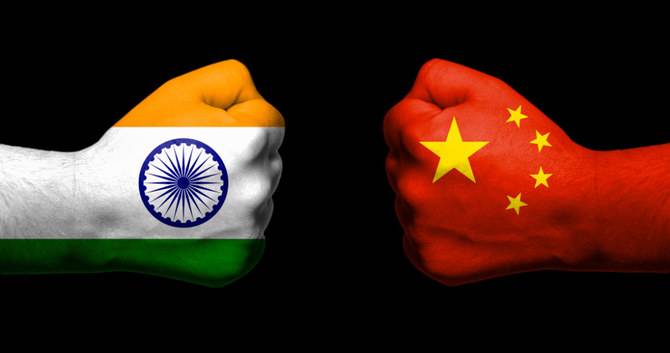
The Indo China Dispute: The two nuclear-armed Asian neighbors, India and China have been engaging in intense diplomatic and military confrontations after clashing on the deadly border recently. The military superpowers have been debating for decades on land in the largely uninhabited elevated area.

The June 15 incident in the disputed Galwan Valley, along the actual Line of Control, killed 20 Indian soldiers. China has accused Indian forces of crossing the border twice, by provoking and attacking Chinese personnel, who have deployed forces and built their infrastructure in the disputed area, leaving the forces of the two sides closer, with an increased risk of clashes.

In reality, the reason behind the Chinese muscle praise is the PLA’s growing military capabilities and political will to use it.

States often present history as an argument when the legal arguments drawn from colonial agreements are too weak to justify sovereignty that feeds on nationalism and does not want to settle disputes between states by international courts or tribunals.

After all, the international tribunals cannot go down history and do not depend on the historians in the disputed countries. Neutral history is an illusion. In actual disputes before international tribunals, historical claims and a sympathetic colonial past do not determine the outcome of regional conflicts.

India submitted a request from the Chinese government that customary practice must be allowed to continue and that arbitrary measures, such as for example, requests for currency exchanges already held by Indian merchants, should not be enforced.

China’s lack of respect for international law, the expansion of land claims where there are power gaps, and efforts to exclude outside actors from the regional intervention are all common themes of Chinese exploits at sea from South China, the East China Sea, and now India.

China’s neighbors should avoid supporting China’s economy (and therefore funding its military) by strengthening relations with the United States, Australia, and other like-minded countries. If those in the Indo-Pacific region want to limit China’s territorial encroachments, they must directly counter China’s behavior and intentions.

It is in India’s interest to ensure that the SCS remains a part of the global commons and China is encouraged to pursue its interests in a legitimate manner. For this, India must meet the expectations of ASEAN with regional agreements such as the RCEP being of great importance in this regard.

It goes without saying that India and China are expected under international law to cooperate and resolve harassing differences in the interests of peace and their mutual economic interests. Undoubtedly, in the negotiated settlement, the settlement of border disputes in the 21st century will be tinged with geopolitical considerations.

Trade relations between India and China in the expanding technology market play a role. China cannot ignore the fact that the trade surplus in its favor in the past two years has been around 50 to 60 billion dollars. China cannot ignore hostility around the world for its alleged role in the spread of Covid-19 killing lakhs of people.

Amid calls by private individuals and associations for the boycott of Chinese goods in the wake of Beijing’s misadventure, speculation of an alleged crackdown by the authorities on consignments from China has been intensified.

The sudden move of the customs authorities to carry out 100 percent checks of imports of consignments from China at the ports has thrown the domestic industry into a tizzy. The leading voices of the world must be exemplars in every way. Even though a holistic ‘Boycott China’ policy could boomerang for India, selective repeals could substantially harm the Chinese economy.

The driving idea presently has been to ensure that Chinese businesses do not make headway in the Indian markets in the near future. The center has hardened to crack down on substandard and non-essential imports from China which is likely to hit the Chinese exporters the most.

Severely hit by the Covid-19 pandemic, the government has already revised the FDI policy to curb opportunistic takeovers or acquisitions of companies surviving a liquidity crisis to cash-rich Chinese investors. FDI proposals would hence require government clearance coming from investors of the bordering countries.

The emerging trend across segments has been to revoke contracts won by Chinese companies. There has been a surge in domestic sentiments against Beijing for the violent border stand-off, calling for the boycott of Chinese goods, but that is much easier said than done.

Respecting international law, recognizing the legitimate interests of partners, supporting multilateralism, and promoting the common good are the only few ways for building a durable world order. It is important to recognize that China has a huge presence in the supply chain involving India, and the disruption caused could hurt in return India’s economy and consumers.

In segments like electronics, pharma, and telecom, our dependence on China is substantial. The initiative must now be driven by the idea of building of self-reliant ecosystem with minimal dependence on China.


Tags: asian neighbors, the indo china dispute, military superpowers, nuclear armed asian neighbors

All Right Reserved